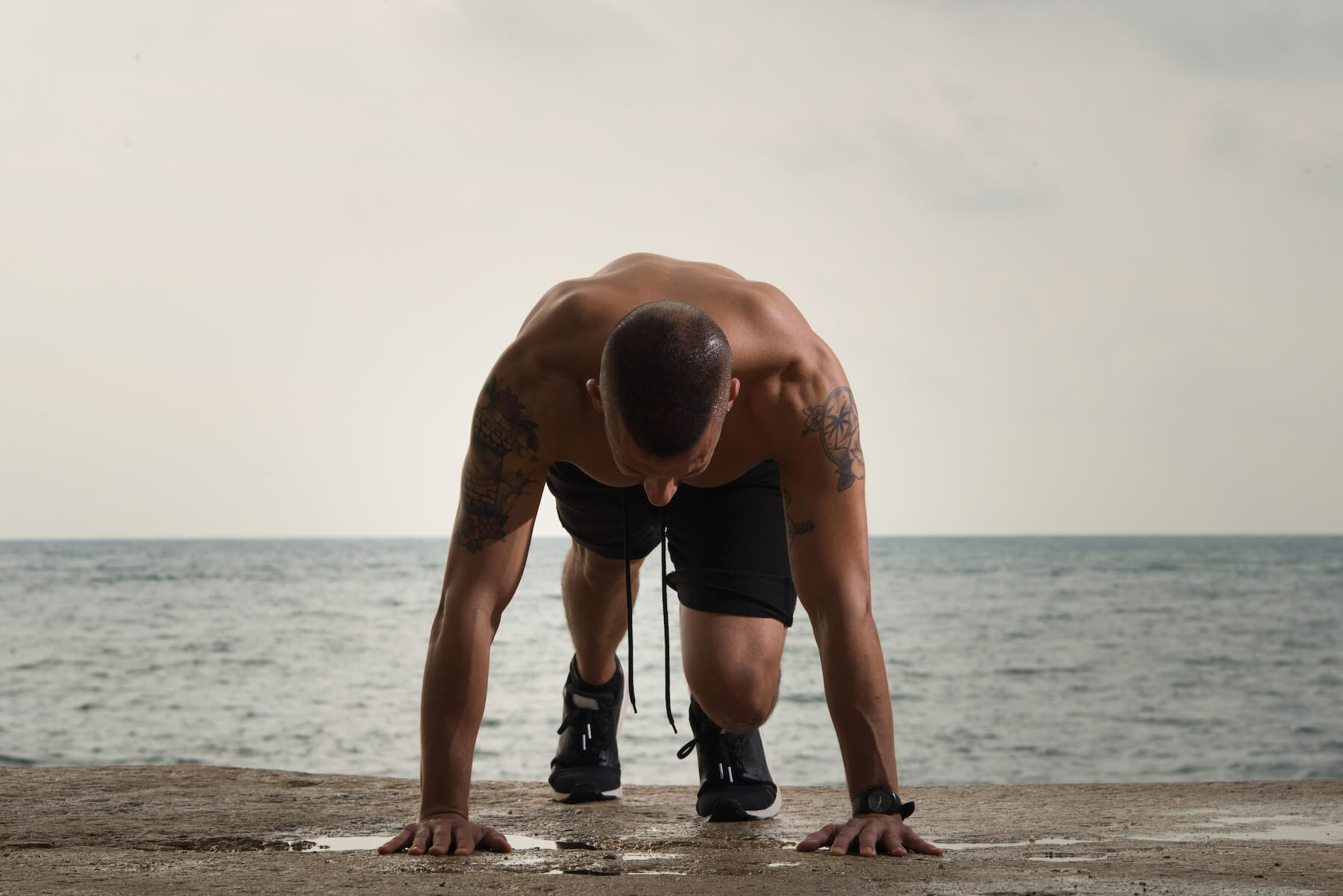
The setting for Beach Functional Training is not merely a backdrop: it is an active part of the session. Sand provides distinctive characteristics that can turn an exercise routine into a different and challenging experience.
Natural instability
Sand continually challenges balance and stability, involving muscles that may be less active on stable surfaces. Maintaining control develops core strength and general coordination.
Additional resistance
Walking or running on sand requires more effort than on hard surfaces because of the resistance underfoot. Each step is more demanding, increasing the cardiovascular challenge and energy expenditure.
Lower impact
Sand provides a softer surface than asphalt or concrete. The original article presents this as useful for reducing joint loading during training and discusses its use during recovery from injury.
Connection with nature
Training on the beach connects participants with their surroundings. Fresh air and the sound of the sea can support mood and relaxation, making exercise more enjoyable.
Variety of training
The natural setting allows different activities, from intensive exercise to sunrise yoga. This variety can keep routines interesting and support motivation and regular participation.
Related studies
The original article refers to the following research when comparing sand with firm surfaces.
Energy expenditure
It states that running on sand requires around 1.2–1.6 times as much energy as running on firm ground, relating this to instability and resistance that require the legs to work harder to stabilise the body. Frontiers · EliteFTS.
Neuromuscular adaptations
The article describes a study of junior handball players in which sand plyometric training produced improvements in speed and agility compared with firm-surface training. BioMed Central.
It also discusses activation of lower-limb muscles and hip and knee range of motion, with implications for the feet and ankles. Frontiers.
A beach football study is cited in relation to sprint performance and other physical measures after sand training. Frontiers.
Jumping performance
The article refers to female volleyball players and changes in strength, cardiovascular endurance, jump height and peak force following sand plyometric training. MDPI.
It also cites basketball research relating sand training to changes of direction, sprint speed and jump height. MDPI.
Injury prevention
The original text discusses the cushioning of sand as a possible way to reduce impact on joints during running and jumping. EliteFTS.
Muscular activation
It links running and training on sand with activation of distal lower-limb muscles and changes in hip and knee motion, discussing possible benefits for foot and ankle strength. Frontiers.
Movement efficiency
Mechanical efficiency may be lower because less elastic energy is reused and the foot moves within the sand. The original article weighs this against potential neuromuscular and cardiovascular training benefits. Frontiers · MDPI.